
Carbon Literacy Training (guest blog post by Aimee Parker)
Guest blog post by Aimee Parker, Egin Facilitator and Peer Mentor
Over the last few months, as part of my role as an EGIN facilitator, I have met with a number of groups in the Newport / Monmouthshire area. I have been talking to groups as they start to think about taking climate action within their organisations and communities. A few of the groups were keen to talk to their communities about climate change but finding this difficult or lacking the confidence to do so.
As leaders of their organisations it is vitally important that they are able to have these conversations which will ultimately motivate and inspire their communities. Carbon Literacy training felt like a good option as it supports learners to develop “awareness of the carbon dioxide costs and impacts of everyday activities, and the ability and motivation to reduce emissions, on an individual, community and organisational basis.”
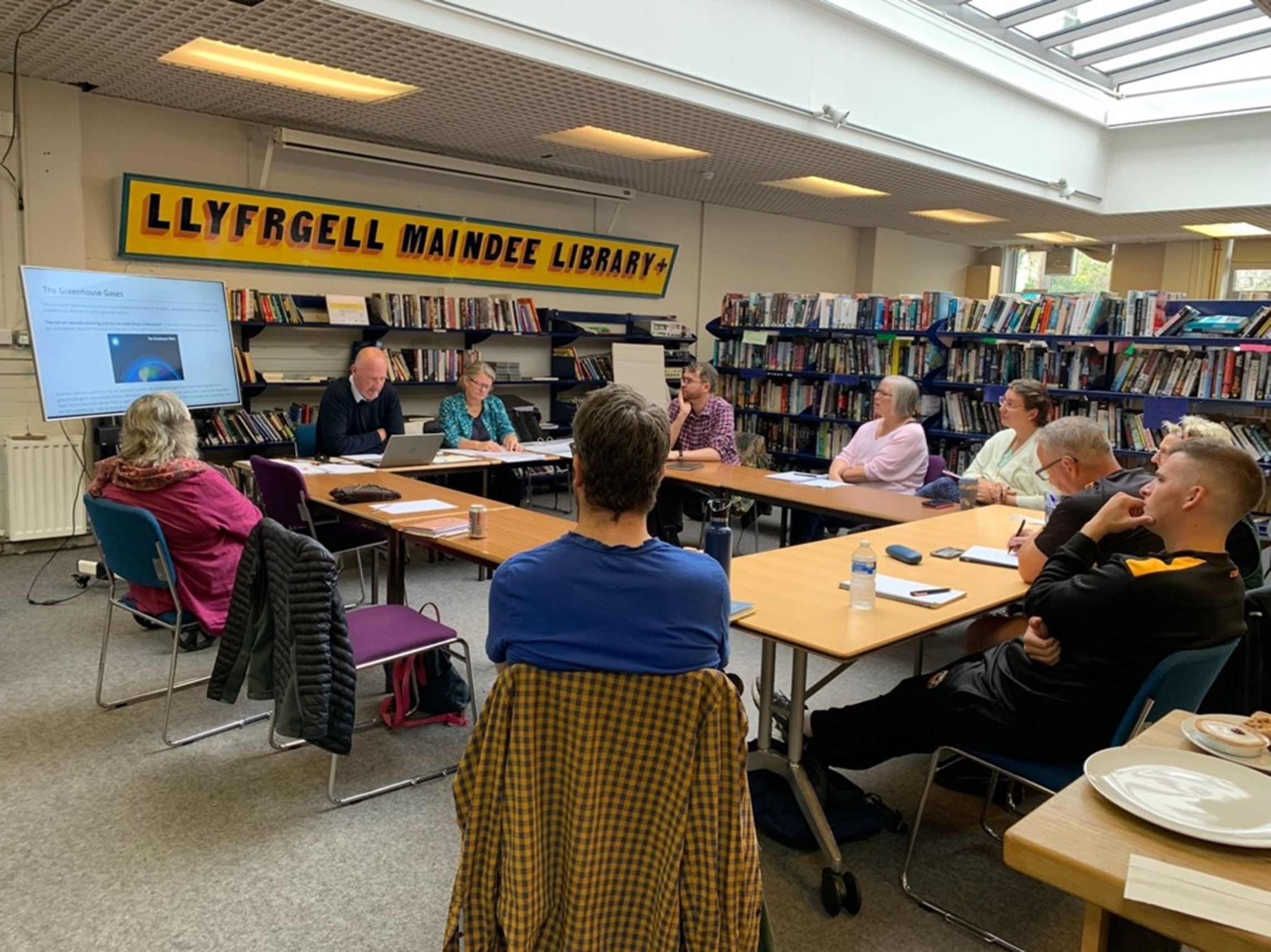
Through Newport City Council I was able to access the Carbon Literacy Training and arranged for it to be delivered at Maindee Library in Newport over a two week period (2 x 3 hour sessions).
The training brought together representatives from County in the Community, Usk Together for the Climate, Tin Shed Theatre, Green Caerleon, Cross Ash Community Centre, Maindee Pantry and the Newport Circular Economy Project. This was a fantastic opportunity for this group of people to meet, share experiences and learn together.

Image 1 – The participants in the training
The trainers took us on a learning journey from understanding the carbon cycle and different types of gases to how our everyday actions have an impact on carbon emissions. We explored what the world may look like with 2 and 4 degree temperature rises.

Image 2 – one of the slides used in the training
One interesting activity was undertaking a lifecycle analysis of a cup of tea. Exploring the carbon impact of the respective parts i.e., the water, tea, sugar and milk was fascinating! We also explored the carbon footprint of various other foods using the BBC Food Calculator; https://www.bbc.co.uk/news/science-environment-46459714
We looked at the average annual carbon footprint of someone living in the UK (13 tonnes) compared to someone living in India (2 tonnes) for example. We were tasked with calculating our own personal carbon footprints using the WWF environmental footprint calculator; https://footprint.wwf.org.uk
We explored different actions which we could take as individuals to reduce our impact on the environment, this ranged from low impact options such as upgrading your lightbulbs to high impact options such as living car free or choosing to have less children.
To become certified in Carbon literacy you have to commit to a personal pledge and also one where you influence a wider group of people. This is a key part of the training. This was poignant for this particular group of participants as most are just starting on the journey of inspiring their communities and organisations to take action.

Image 3 – slide detailing low to high impact personal choices
One of the participants in the training pledged to order vegetarian meals when eating out and also to not buy beef from the supermarket anymore. As their group action they pledged to collaboratively create an art workshop to educate others and to also make posters for display at a community space.
The training was a very positive experience both from an educational perspective but also the bringing together of likeminded people to share experiences.
Here is a quote from one of the participants in the training;
‘The Carbon Literacy course was a great experience to meet like-minded people and enjoy deep discussion around the theme of climate change. The facilitators were fantastic at presenting and initiating group involvement in current topics. It was a hard topic to cover and brought up lots of emotions, not always good ones! It was good to see how we all supported each other through the tough bits to hopefully feel a sense of resilience and also empowered to promote and take action, together as well as individually. Thank you for the experience’.
The hope is that this group of people will continue to connect and share their respective journeys and experiences. Thank you to Newport City Council for supporting this training and to all of the participants for their enthusiasm and commitment to taking action on climate change.